
The Hidden Complexity of FedEx and UPS Contracts, And Why It Matters
If your company ships with FedEx or UPS, you likely have a contract. On the surface, it looks straightforward: negotiated discounts, service terms, an annual rate increase — a standard vendor agreement.
But a parcel agreement is not a static price sheet. It is a dynamic pricing system.
A typical small parcel agreement can include:
- 8 shipping zones
- Multiple weight breaks per service level
- 15–30 different surcharge categories
- Separate discount structures for Ground, Air, Residential, and Commercial
- Fuel surcharge tables that update weekly
- Minimum charge rules that override published discounts
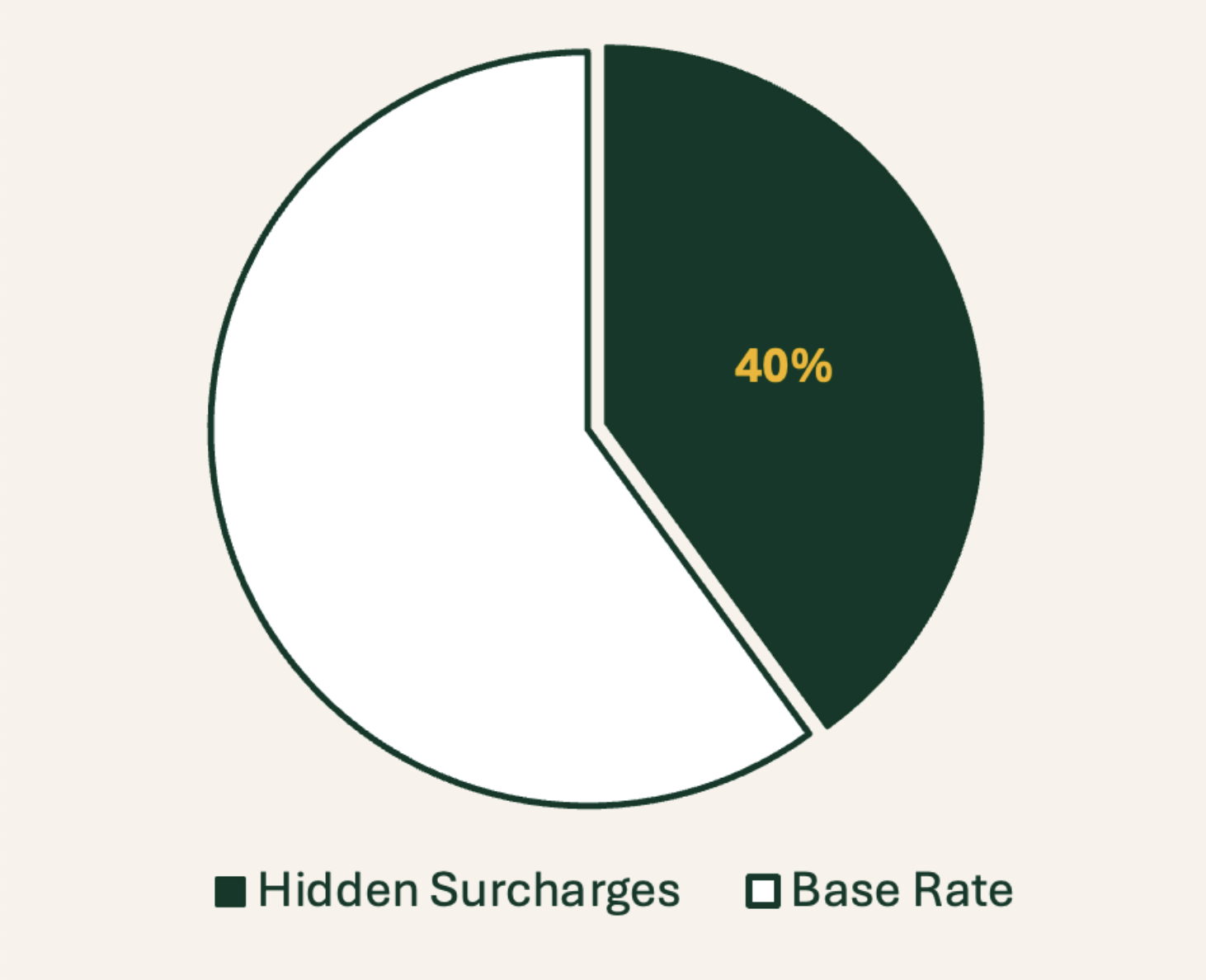
Now multiply that by every single package you ship. Each package is priced based on origin, destination zone, billable weight (actual vs. dimensional), service level, residential status, delivery area classification, fuel index at the time of shipment, and any handling triggers. That's dozens of pricing variables per shipment — which means two things must be true for your agreement to work.
First, the contract must align with what you actually ship — your zones, your weights, your service mix, your residential exposure. Second, it must be monitored continuously.
Because your shipping profile changes. Fuel changes weekly. Carriers introduce new surcharges. General Rate Increases compound annually. Incentive tiers shift. A contract that worked a year ago can quietly drift out of alignment. And because the pricing structure is layered, the impact rarely shows up as one obvious spike. It shows up gradually — margin erosion that feels hard to explain.
Why FedEx and UPS Contracts Feel So Complicated
Shipping cost is never one number. It is a combination of base transportation rates, residential surcharges, delivery area fees, additional handling charges, fuel surcharges, and minimum charges — each component moving independently.
- Some increase annually (General Rate Increases)
- Some fluctuate weekly (fuel)
- Some apply only under specific shipment conditions
- Some compound on top of one another
A contract might show strong discounts on paper. But those discounts typically apply only to base transportation — not to many surcharges. And minimum charges can cap how much of that discount you actually realize. You can have what looks like an aggressive discount and still experience rising year-over-year costs that don't quite make sense. That is not accidental. It is structural.
Where Shipping Costs Really Add Up
Most companies focus on headline numbers — discount percentages and annual rate increases. But the real impact often comes from small structural details:
- Minimum charges that dilute discounts
- Surcharges that grow faster than base rates
- Service-level pricing that doesn't align with your actual shipment mix
- Contract language that limits flexibility
- Incentive tiers that are difficult to consistently hit
None of this is hidden. It is all in the agreement. But it is complex enough that very few companies model how it actually performs against real shipping data. That is where opportunity lives.
Real Example: $1.5M in Small Parcel Shipping Savings
A company spending roughly $6.5 million annually with FedEx and UPS believed they had a strong agreement in place. The discounts looked competitive, the operations team was experienced, and nothing appeared broken.
But when the contract was evaluated against actual invoice data, structural gaps emerged. Minimum charges were limiting the impact of discounts. Certain surcharges were misaligned with the shipment profile. Service-level pricing didn't reflect how the business was actually shipping.
There was no single dramatic error. Just misalignment. Correcting those structural issues translated into approximately $1.5 million in annual savings. The contract wasn't flawed — it simply wasn't built around how the company truly shipped, and that difference mattered.
How TW Partners Reviews and Optimizes Carrier Contracts
At TW Partners, we do not guess. And we do not rely on headline discounts.
- 1Data Analysis: We analyze your actual shipping invoices — not summaries, not assumptions — to understand your true shipment profile.
- 2Contract Modeling: We model your existing agreement against your real data to quantify where cost exposure exists.
- 3Market Evaluation: We evaluate your effective rates against current market conditions to determine where leverage exists.
- 4Strategy & Negotiation Support: We build a structured negotiation plan aligned with your business and support the process to ensure the improvements hold over time.
There is no disruption to your operations. No carrier change unless it makes strategic sense. No risk-based engagement. FedEx and UPS build sophisticated pricing systems — that is how they protect their margins. Our job is to make sure your agreement protects yours.
If you ship $100K+ annually with FedEx or UPS, a professional contract review can uncover whether your agreement is truly optimized.
Want to know if your contract is truly optimized?
The analysis is free and takes two minutes.